Debunking Resume Length Myths: Tailoring Your Document for Maximum Impact
Debunking Resume Length Myths: Tailoring Your Document for Maximum Impact
Navigating the job market in 2025 means understanding that old advice about resume length no longer applies universally. The "one-page rule" or "two-page maximum" are often cited, but these are more myths than hard-and-fast rules. Modern recruitment strategies, driven by Applicant Tracking Systems (ATS) and discerning hiring managers, demand a more nuanced approach. Instead of adhering to arbitrary page counts, your goal should be tailoring your document for maximum impact, ensuring every word contributes to showcasing your value and securing that interview. This guide will debunk common resume length myths and provide actionable strategies to craft a compelling, effective resume that adapts to your career stage and target roles.
Key Points:
- No Universal Rule: Resume length depends on experience, industry, and target role.
- Focus on Relevance: Every bullet point must add value and directly relate to the job.
- ATS Optimization: Structure and keywords are crucial for digital screening.
- Career Stage Matters: Entry-level vs. executive roles have different expectations.
- Tailoring is Key: Customize your resume for each application for best results.
The Evolution of Resume Length: What Recruiters Really Want in 2025
The notion that all resumes must fit on a single page is perhaps the most persistent of all resume length myths. While brevity is always appreciated, the ideal length for a resume in today's landscape is directly tied to your career experience and the complexity of the roles you're pursuing. Recruiters aren't necessarily counting pages; they're looking for relevant information presented clearly and concisely. Their primary goal is to quickly ascertain if you possess the skills and experience necessary for the position.
A significant shift in hiring practices, as highlighted by a LinkedIn Talent Solutions Report in 2023, indicates that skills-based hiring is gaining prominence. This means your resume needs to demonstrate not just what you did, but how well you did it and what skills you utilized. Therefore, focusing on delivering impactful, quantifiable achievements is far more crucial than strictly adhering to a page limit.
Understanding the Impact of Career Stage on Resume Length
The "perfect" resume length isn't static; it evolves with your professional journey. Tailoring your document for maximum impact means understanding these evolving expectations.
Entry-Level and Early Career Professionals (0-5 Years Experience)
For those just starting or with limited experience, a one-page resume is often ideal. This forces you to be incredibly selective and highlight your most relevant academic achievements, internships, volunteer work, and transferable skills. Recruiters expect to see potential and a clear career trajectory, not an exhaustive list of every project. Your challenge is to make every word count, showcasing how your limited experiences have prepared you for the role. Focus on relevant coursework, projects, and soft skills that align with job descriptions.
Mid-Career Professionals (5-10+ Years Experience)
As you gain more experience, a two-page resume becomes perfectly acceptable, even expected. This allows you to detail a wider range of professional experiences, key accomplishments, and specialized skills without sacrificing readability. You'll likely have multiple roles, significant projects, and leadership responsibilities to highlight. The key here is not to add content just to fill space, but to expand on the most impressive and relevant achievements for the target role. A study published by Forbes Career Survey 2024 noted that mid-career professionals who detailed 3-5 key achievements per role saw a 15% higher callback rate compared to those with generic job descriptions.
Senior Professionals and Executives (10+ Years Experience)
For seasoned professionals, executives, or those in highly specialized fields, a two-to-three-page resume can be appropriate. Your extensive background, leadership roles, strategic contributions, and significant impact on organizations cannot always be condensed into two pages without losing critical information. Here, the resume acts more as a strategic overview of your career trajectory, showcasing thought leadership, significant P&L responsibilities, and major achievements. However, even at this level, conciseness remains paramount. Every section should clearly communicate value. Consider including a strong executive summary at the top to capture attention immediately.
Debunking Resume Length Myths: Beyond Page Count
Beyond the simple page count, several other resume length myths need to be addressed to truly optimize your application.
Myth 1: Longer Resumes are Always Better for More Experience
Reality: While more experience can justify a longer resume, irrelevant experience only adds clutter. The goal isn't to list everything you've ever done, but everything relevant to the specific job you're applying for. If you're a seasoned professional transitioning careers, a two-page resume highlighting transferable skills and recent achievements will be more effective than a three-page document detailing every role from two decades ago.
Myth 2: ATS Prefers Shorter Resumes
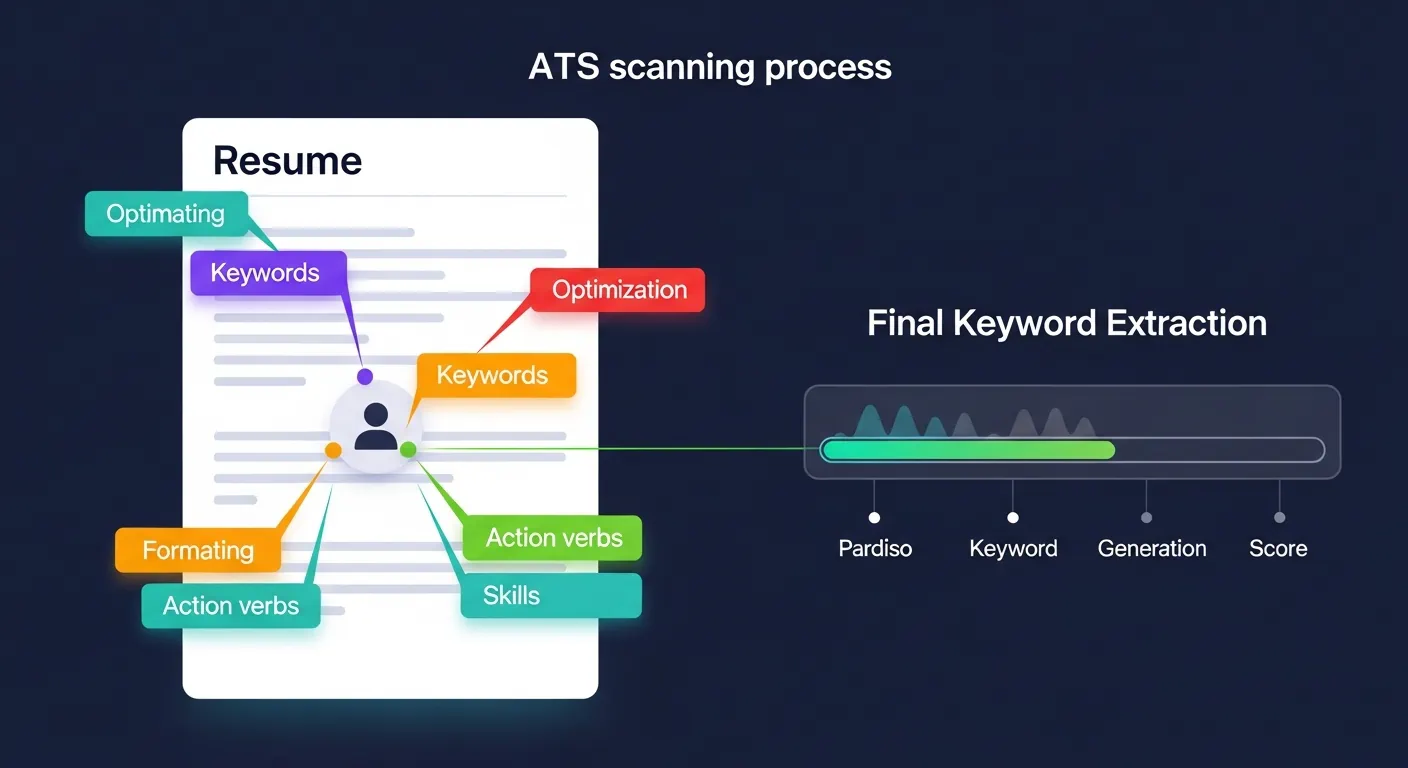
Reality: Applicant Tracking Systems (ATS) don't care about page count. They parse content for keywords, skills, and chronological data. A well-formatted, keyword-rich two-page resume will perform better than a poorly optimized one-page document. In fact, cutting too much relevant information to fit a single page might strip out keywords an ATS is programmed to find. Learn more about optimizing your resume for these systems by checking out our guide on /articles/optimizing-your-resume-for-ats.
Myth 3: Recruiters Only Spend Six Seconds on a Resume
Reality: This oft-quoted statistic is largely misinterpreted. Recruiters spend six seconds initially scanning a resume to decide if it's worth a deeper look. If your resume is well-organized, easy to read, and immediately showcases relevant information, they will spend more time. The six-second rule emphasizes the importance of a strong summary, clear headings, and quantifiable achievements prominently displayed. It doesn't mean you should remove valuable content.
Differentiated Insights: Tailoring for the Modern Job Market
To truly tailor your document for maximum impact in 2025, consider these differentiated insights:
- The Rise of AI in Screening: Beyond traditional ATS, AI-driven screening tools are becoming more sophisticated. These tools analyze not just keywords but also the context of your experience and the impact of your achievements. This means your resume needs to be rich in action verbs, quantifiable results, and specific skill mentions, regardless of length. Focus on storytelling within your bullet points. For example, instead of "Managed projects," write "Led cross-functional teams of 5 engineers, delivering 3 key software updates ahead of schedule, resulting in a 15% increase in user engagement."
- Hybrid Resume Formats: The traditional chronological resume is still standard, but many professionals are finding success with hybrid formats that lead with a powerful summary and skills section, followed by a chronological work history. This allows you to immediately showcase relevant skills and accomplishments, which is critical for capturing recruiter attention, especially when you have extensive experience. This approach helps in debunking resume length myths by prioritizing content value over strict page limits.
Actionable Strategies for Optimizing Your Resume Length
- Prioritize Relevance: Read the job description meticulously. Every bullet point, skill, and experience on your resume should directly relate to the requirements. If it doesn't, consider removing or rephrasing it.
- Quantify Everything: Use numbers, percentages, and metrics to demonstrate the impact of your work. "Increased sales by 20%" is far more compelling than "Responsible for increasing sales."
- Strong Action Verbs: Start every bullet point with a powerful action verb (e.g., Led, Developed, Optimized, Initiated).
- Concise Language: Eliminate jargon where possible. Use strong, clear language. Avoid lengthy paragraphs; opt for bullet points. Our article on /articles/crafting-impactful-bullet-points-for-your-resume offers more tips.
- White Space and Readability: Even a longer resume can feel short if it's well-designed with adequate white space, clear headings, and a readable font. Cluttered resumes, regardless of length, are a turn-off.
- PDF Format: Always submit your resume as a PDF unless otherwise specified. This preserves formatting across different systems and devices.
Frequently Asked Questions About Resume Length
Q: Is a one-page resume always best for entry-level positions?
A: For entry-level roles, a one-page resume is generally preferred. It showcases your most relevant education, internships, and skills concisely, demonstrating your ability to prioritize and communicate effectively. As you gain more experience, a second page becomes acceptable.
Q: How do I decide what to cut if my resume is too long?
A: Start by evaluating each bullet point for relevance to your target job. Remove outdated or less significant experiences, and consolidate responsibilities that aren't critical. Focus on quantifiable achievements over general duties, and ensure every word contributes to making a strong case for your candidacy.
Q: Can a resume be too short?
A: Yes, a resume can be too short if it fails to provide enough detail about your relevant skills and accomplishments. While brevity is good, omitting key experiences or quantifiable results just to fit a single page can weaken your application. The goal is completeness with conciseness.
Q: Does my industry affect the ideal resume length?
A: Absolutely. Creative fields might value concise, visual portfolios more, while academic or scientific roles often require longer CVs detailing publications and research. Tech roles, especially for senior engineers, may benefit from two pages to list specific technologies and project impacts. Always research industry norms.
Conclusion: Tailoring for Triumph
The outdated notion of strict resume length myths often hinders job seekers from presenting their best selves. In today's competitive job market, the most effective resume is not one that adheres to an arbitrary page count, but one that is meticulously tailored to the specific role and showcases your value with maximum impact. By focusing on relevance, quantifiable achievements, and clear communication, you empower your resume to open doors, regardless of its page count. Remember, your resume is a marketing document designed to get you an interview – make every word count towards that goal.
We encourage you to share your experiences in the comments below! What resume length strategies have worked best for you? For further guidance on optimizing your job application, explore our comprehensive range of articles under the /categories/resume-writing-tools category. Happy job hunting!
This article was published on 2025-11-30. Information regarding resume best practices is subject to change with evolving industry trends and recruitment technologies. We recommend reviewing your resume strategies regularly. Future topics for exploration: "The Role of AI in Resume Screening: Preparing Your Document," "Video Resumes: Are They the Future?," and "Personal Branding Beyond the Resume: Integrating LinkedIn and Portfolios."