Customizing Your Resume Template to Stand Out from the Competition
Customizing Your Resume Template to Stand Out from the Competition
In today's fiercely competitive job market, simply having a resume isn't enough. Generic, off-the-shelf templates often get lost in the shuffle, failing to capture the attention of busy hiring managers or pass the initial ATS (Applicant Tracking System) screening. The real secret to success lies in customizing your resume template – transforming a standard document into a powerful, personalized marketing tool that highlights your unique value. This article will guide you through strategic resume template customization, ensuring your application not only gets noticed but also clearly communicates why you are the ideal candidate. Mastering this skill is paramount for anyone serious about career advancement.
Key Points for Resume Template Customization
- Tailor for Every Role: Adapt your resume to each specific job description, not just generic applications.
- ATS Optimization: Ensure your customizations remain friendly to Applicant Tracking Systems.
- Highlight Unique Value: Use design and content to showcase your personal brand and achievements.
- Quantify Your Impact: Replace vague statements with data-driven accomplishments.
- Iterate & Refine: Continuously update and improve your template based on feedback and market trends.
Understanding the "Why": The Power of Personalizing Your Resume
Many job seekers make the mistake of using one-size-fits-all resumes. However, modern recruitment processes demand a more nuanced approach. Personalizing your resume is no longer an option but a necessity to truly differentiate yourself. It demonstrates initiative and a genuine interest in the role, rather than just sending a blanket application.
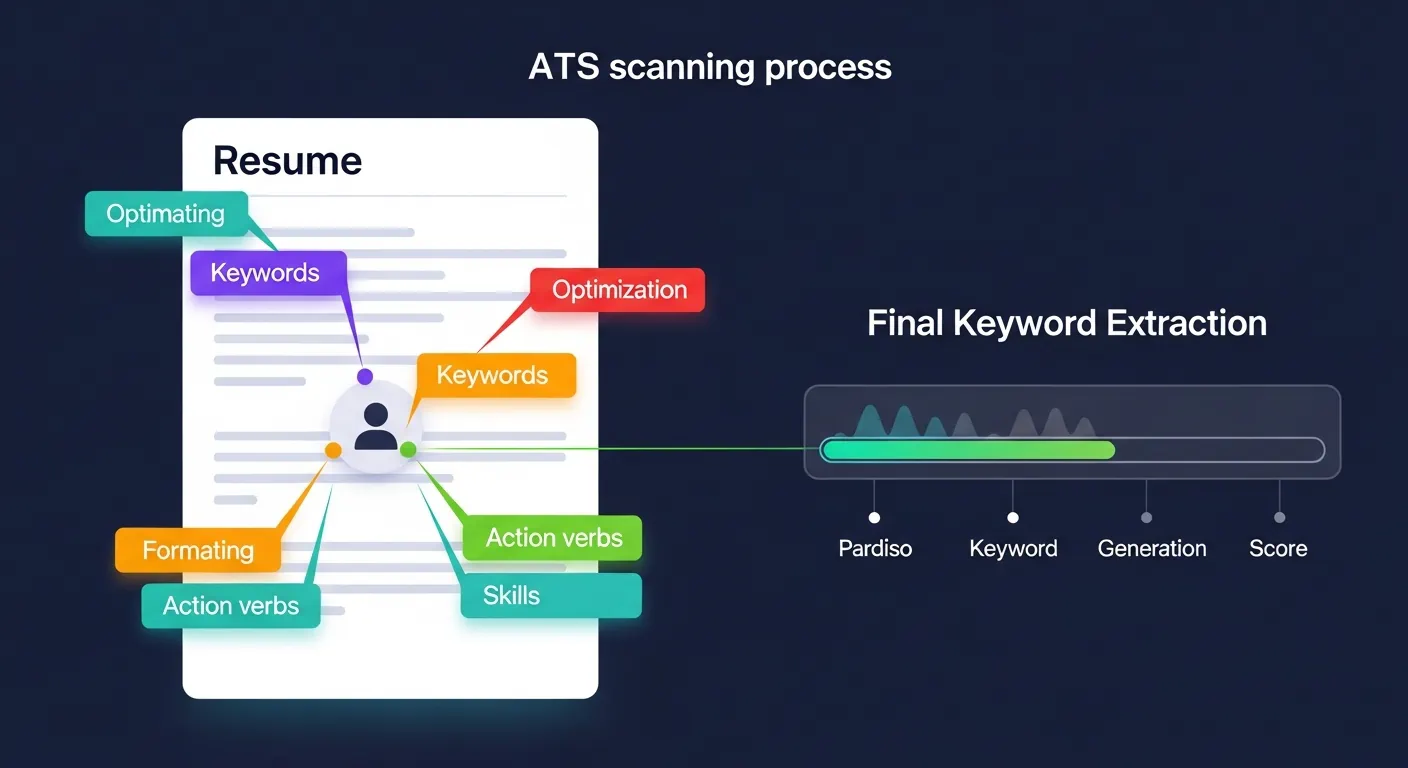
Hiring managers are inundated with applications. A recent 2024 LinkedIn study indicated that a recruiter spends an average of just 6-7 seconds reviewing a resume initially. A customized resume immediately signals relevance, making it more likely to pass this initial glance. Moreover, Applicant Tracking Systems (ATS) are the first gatekeepers. These systems scan for keywords and specific formatting. An effectively customized resume, especially one built on an ATS-friendly design, ensures your application isn't filtered out before a human even sees it.
Key Strategies for Customizing Your Resume Template Effectively
Successfully customizing your resume template involves a blend of content refinement and subtle design adjustments. The goal is to create a document that is both impactful and easy to read.
Tailoring Your CV to the Job Description: The Keyword Strategy
The most critical aspect of resume customization is tailoring your CV to the specific job description. This goes beyond simply copying keywords. It involves understanding the core competencies and responsibilities outlined in the posting and then weaving those themes naturally into your experience, skills, and summary. For example, if a job emphasizes "cross-functional team leadership," ensure your experience section highlights instances where you led diverse teams to achieve project goals.
Reverse-engineering job descriptions is a differentiated strategy. Instead of just identifying keywords, analyze the verbs used and the desired outcomes. For instance, if a job description frequently uses terms like "optimize," "implement," or "strategize," ensure your resume reflects similar action verbs. This deep dive helps you align your narrative more precisely with the employer's needs.
Highlighting Your Unique Value Proposition
Your resume should clearly articulate what makes you stand out. Generic phrases like "results-driven professional" offer little insight. Instead, focus on quantifiable achievements that demonstrate your impact. Did you increase sales by 15%? Did you streamline a process, saving 10 hours per week? These specific examples create a compelling story. Think of your resume as a collection of mini-case studies.
Consider incorporating a "Core Competencies" or "Key Skills" section that directly mirrors the skills requested in the job description. This immediate visual match helps both ATS and hiring managers quickly identify your suitability. Bold important skills or achievements to draw the eye.
Design Elements: Enhancing Readability and Professionalism
While content is king, presentation is crucial. Thoughtful design choices can significantly improve your resume's impact without sacrificing professionalism.
Choosing the Right Font and Color Palette
Opt for professional, clean fonts like Calibri, Lato, or Open Sans. Limit your resume to one or two complementary fonts. For color, a subtle accent color (e.g., a dark blue or grey) can be used sparingly for headings or section dividers to create visual interest. Avoid bright, distracting colors or overly decorative fonts.
Strategic Use of White Space
Plenty of white space makes your resume appear less cluttered and more inviting to read. Ensure adequate margins, line spacing, and spacing between sections. Overly dense text blocks are a major turn-off. A well-structured resume, typically one page for early to mid-career professionals and two pages for senior roles, indicates conciseness and professionalism.
Advanced Techniques for Resume Template Customization
To truly make your resume template stand out, consider these advanced strategies that go beyond basic content adjustments.
Incorporating Data and Achievements with the "Impact Story" Framework
Simply listing duties isn't enough. Transform your bullet points into compelling "impact stories" using the Challenge-Action-Result (CAR) method. For example, instead of "Managed social media accounts," write: "Resolved customer service issues across social media platforms, reducing response times by 20% and improving customer satisfaction scores by 10% (as per Q3 2023 customer feedback report)." This demonstrates both the action and its measurable positive outcome. This framework provides specific evidence of your contributions, aligning perfectly with E-E-A-T principles.
Skills Section Optimization and "Skill Taxonomy"
Your skills section needs to be strategically designed for both human readers and ATS. Instead of just a long list, categorize your skills: "Technical Skills" (e.g., Python, SQL, Salesforce), "Soft Skills" (e.g., Leadership, Communication, Problem-Solving), and "Languages." For ATS optimization, use both common terms and their acronyms (e.g., "Customer Relationship Management (CRM)"). A differentiated approach is to think about skill adjacency – listing skills relevant to each other, which helps ATS understand context. For instance, instead of just "Excel," you might have "Excel (Advanced), Data Analysis, Pivot Tables," showing a deeper capability.
Project Showcases and Portfolio Links
For creative, technical, or project-based roles, consider dedicating a small section to "Key Projects" or including a link to an online portfolio. This offers tangible evidence of your abilities beyond written descriptions. Ensure the links are functional and lead to relevant work samples. According to a 2025 talent acquisition survey by HR Insights Collective, resumes with direct links to relevant online portfolios or GitHub repositories were 40% more likely to receive a second look for technical roles.
Action Verbs and Contextualized Language
Elevate your language by using strong, dynamic action verbs at the beginning of each bullet point (e.g., "Spearheaded," "Orchestrated," "Pioneered"). Avoid passive voice. Furthermore, ensure your language is contextualized. Instead of saying "worked with clients," specify "collaborated with B2B clients to define project scopes." This precision enhances clarity and impact, truly showcasing your professional experience.
Avoiding Common Customization Pitfalls
While customizing your resume template is powerful, it's possible to overdo it or make common mistakes that hinder your application.
- Over-Customization: Don't let design elements overshadow content. A resume that's too graphically busy, uses too many colors, or has complex layouts can be difficult to read and may confuse ATS. Keep it professional and clean.
- Neglecting ATS Optimization: Even with customization, ensure your resume remains scannable. Avoid images for text, fancy fonts that ATS can't read, and excessive graphics. Stick to standard sections and clear headings.
- Inconsistency Across Applications: While you should tailor each resume, maintain a consistent professional brand. Ensure the core information (contact details, career trajectory) is always accurate and uniform.
- Not Proofreading: A customized resume with typos or grammatical errors undermines your professionalism. Always proofread meticulously, and ideally, have someone else review it for fresh eyes.
Leveraging Modern Resume Templates for Maximum Impact
Starting with a high-quality, modern resume template provides an excellent foundation for customization. These templates are often designed with ATS compatibility and readability in mind. When selecting one, consider its structure, clarity, and ease of modification.
Tools like Canva, Google Docs, and Microsoft Word offer a plethora of templates that are easily editable. These platforms allow you to adjust sections, change fonts, and modify color schemes without starting from scratch. Remember, the template is a starting point; your unique content and strategic modifications are what will ultimately make it shine. Focus on presenting a clear, compelling narrative that positions you as the ideal candidate.
Frequently Asked Questions About Resume Template Customization
How much customization is too much for a resume?
The key is balance. Your resume should be highly tailored to the job description but remain professional, clean, and easy to read. Avoid excessive graphics, overly bold colors, or complex layouts that might distract from your content or confuse an ATS. Focus on strategic content changes and subtle design enhancements that improve readability and highlight your relevance, rather than radical stylistic overhauls. The goal is clarity and impact, not artistic expression.
Can I use different templates for different industries?
Yes, absolutely. Using different templates for vastly different industries or roles is an effective strategy. For instance, a creative role might benefit from a template with a slightly more modern design and a link to an online portfolio, while a corporate finance role may require a more traditional, text-heavy template emphasizing data and analytical skills. The core principle remains: choose a template that best showcases your qualifications for that specific industry's expectations and norms.
How do I make sure my customized resume is still ATS-friendly?
To maintain ATS compatibility, stick to standard headings (e.g., "Experience," "Education," "Skills"), use common fonts, and avoid placing crucial information solely within graphics or text boxes. Ensure your contact information is at the top in plain text. Use keywords from the job description naturally throughout your resume. After customizing, you can use online ATS checkers to get a preliminary scan of how a system might interpret your document, helping you identify potential issues.
Is it okay to use a resume builder for customization?
Yes, many online resume builders offer excellent starting points for customization. They provide structured templates that are often ATS-friendly and allow you to easily input and organize your information. The key is to not just fill in the blanks, but to actively customize the content, wording, and even subtle design elements (if the builder allows) to specifically match each job application. Use the builder as a powerful tool to streamline the process, not as a replacement for thoughtful personalization.
Unlock Your Potential: Start Customizing Today!
Mastering the art of customizing your resume template is a pivotal step in any successful job search. It's about more than just filling in blanks; it's about crafting a narrative that resonates directly with hiring managers and demonstrates your immediate value. By consistently tailoring your content, optimizing for ATS, and refining your professional presentation, you significantly increase your chances of securing that coveted interview.
Don't let a generic resume hold you back. Take the initiative to personalize your application, showcase your unique impact, and truly stand out from the competition. We encourage you to start experimenting with these strategies today! Share your insights or questions in the comments below, and consider exploring our other articles for further reading.
For more in-depth guidance on related topics, consider reading:
- Crafting an Impactful Cover Letter for Your Dream Job
- Choosing the Right Resume Format for Your Career Stage
- Explore more in Resume Templates and Formats
This article was published on 2025-11-30. Information regarding resume best practices is subject to evolving industry trends; we recommend checking for updates annually. Future articles may explore "AI-Powered Resume Optimization Tools" and "The Role of Video Resumes in Modern Hiring."