Beyond Spell Check: Advanced Strategies for a Flawless Resume Proofread
Beyond Spell Check: The Quest for a Flawless Resume Proofread
In today's competitive job market, your resume is often the first, and sometimes only, impression you make. While spell check catches obvious typos, a truly flawless resume proofread goes far beyond simple grammar and spelling. It's about meticulous attention to detail, consistency, and impact. Overlooking even a minor error can communicate a lack of professionalism or care, potentially costing you an interview opportunity. This guide dives into advanced strategies to ensure your resume stands out for all the right reasons – its impeccable quality.
Key Points for an Impeccable Resume
- Go Beyond Basic Tools: Relying solely on automated spell checkers is insufficient for professional documents.
- Engage Multiple Senses: Reading aloud and printing your resume can reveal hidden errors.
- Strategic Review Techniques: Implement methods like reading backward and checking for consistency.
- Seek External Feedback: Fresh eyes from trusted contacts are invaluable for catching subtle mistakes.
- Prioritize ATS Compatibility: Ensure formatting remains intact after conversion.
Why Beyond Spell Check is Crucial for Your Resume's Success
Many job seekers mistakenly believe that running their resume through a basic spell checker is enough. While essential, these automated tools often miss critical nuances that human eyes (and advanced techniques) can catch. A perfectly crafted resume isn't just about what it says, but how it says it and how it looks.
Small errors, like inconsistent formatting, misused homophones (e.g., "their" vs. "there"), or even a forgotten period, can subtly undermine your credibility. Recruiters, who spend mere seconds scanning each resume, are highly attuned to these indicators of attention to detail. A recent 2024 report from the LinkedIn Career Blog highlighted that over 60% of recruiters would dismiss a resume due to multiple typos or grammatical errors, emphasizing the zero-tolerance policy for sloppiness.
The goal isn't just to be error-free; it's to project an image of precision and professionalism. This deep-dive approach to proofreading ensures your resume reflects the highest standards, setting you apart from the competition.
The True Cost of Overlooked Resume Errors
The consequences of a poorly proofread resume extend beyond a simple rejection. It can be perceived as a lack of effort, poor communication skills, or even a disregard for quality work. In roles where precision is paramount, such as finance, engineering, or legal, these mistakes are amplified. Recruiters often interpret errors as a preview of your potential performance on the job – if you can't meticulously proofread your own career document, what does that say about your future work?
Furthermore, even if an error doesn't lead to outright rejection, it can diminish the perceived value of your experience and achievements. A strong candidate might be overlooked simply because their resume had preventable flaws. Ensuring a flawless resume proofread is an investment in your professional future.
The Art of the Deep Dive: Advanced Resume Proofreading Techniques
Moving beyond superficial scans requires a structured, multi-faceted approach. These techniques are designed to trick your brain into seeing the document anew, revealing errors that routine readings might miss.
1. Read Your Resume Backwards (Sentence by Sentence)
This unusual technique forces your brain to focus on individual words and sentences rather than the overall narrative flow. By disrupting the context, you're more likely to spot spelling errors, missing words, or grammatical mistakes that you'd otherwise "autocorrect" in your head. Start with the last sentence of your resume and work your way up to the first. This is incredibly effective for catching spelling and basic grammar issues.
2. Read Your Resume Aloud
Hearing your words can be a powerful proofreading tool. When you read aloud, your brain processes the information differently, often revealing awkward phrasing, run-on sentences, or grammatical errors that look fine on paper. Pay attention to how the sentences sound; if something sounds clunky or hard to articulate, it likely needs revision. This technique is particularly useful for identifying issues with flow, rhythm, and clarity.
3. Print It Out and Use a Ruler
Staring at a screen for too long can lead to eye fatigue and missed errors. Printing your resume allows for a fresh perspective. Take a physical ruler or a blank piece of paper and slide it down the page, line by line. This method forces you to concentrate on one line at a time, preventing your eyes from jumping ahead and overlooking mistakes. Circle any errors you find with a pen.
4. Check for Consistency Across the Document
Consistency is a hallmark of a polished resume. This goes beyond just spelling. Scrutinize:
- Dates: Ensure start and end dates align perfectly with employment history.
- Formatting: Are all bullet points styled the same? Are all company names bolded or italicized consistently? Is spacing uniform?
- Tenses: Use consistent verb tenses for active (current roles) and past (previous roles) positions.
- Punctuation: Consistent use of periods at the end of bullet points (either all or none).
- Abbreviations: If you abbreviate once (e.g., "HR"), use it consistently or spell it out everywhere.
A study published in 2023 by the Society for Human Resource Management (SHRM) highlighted that inconsistencies in formatting and terminology are often red flags for recruiters, signaling a lack of meticulousness.
5. Verify Keywords Against the Job Description
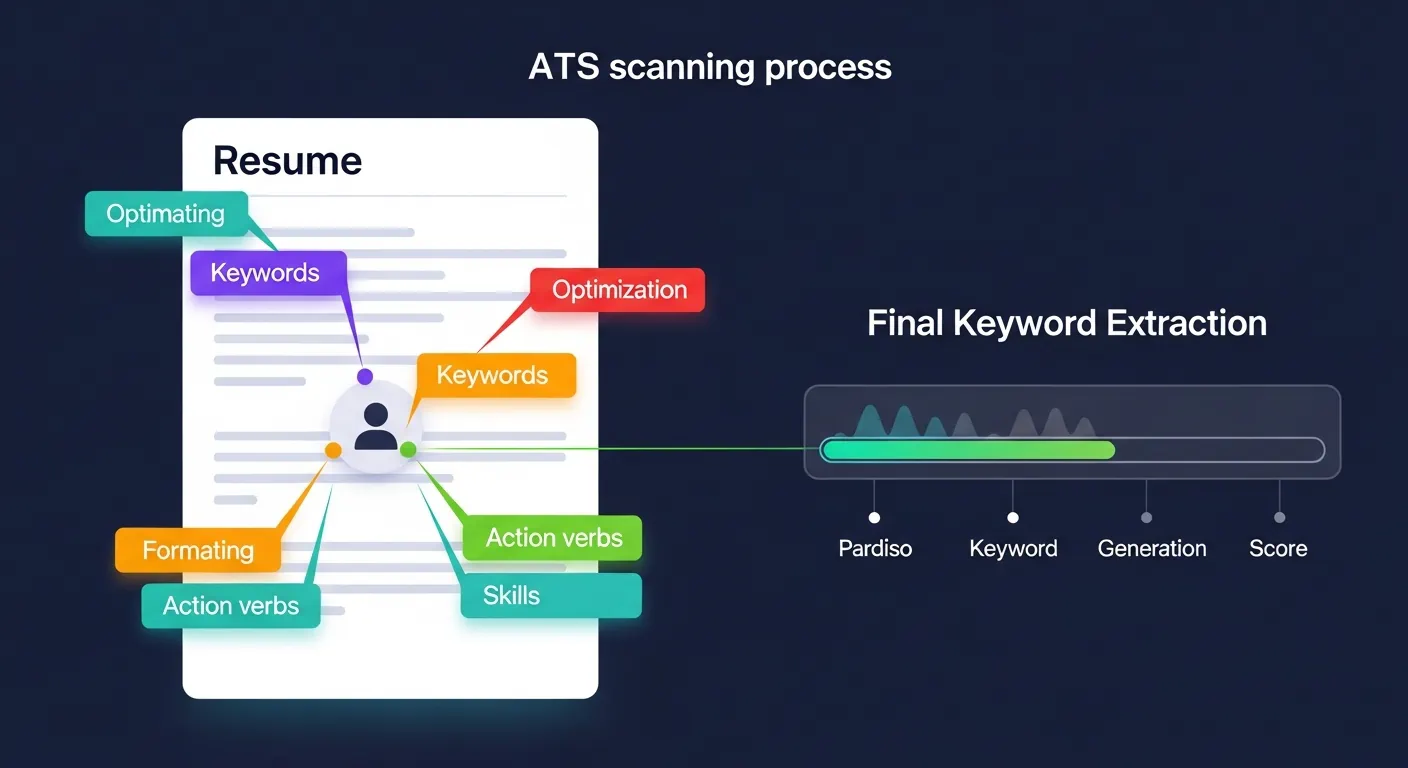
For a truly flawless resume proofread, you must tailor it to the specific job. Review the job description one last time and ensure that relevant keywords, skills, and qualifications are integrated naturally into your resume. This not only helps with Applicant Tracking Systems (ATS) but also demonstrates you've carefully reviewed the requirements. Don't just scan; cross-reference each bullet point and skill. For more on optimizing for these systems, consider exploring resources on /articles/crafting-an-ats-friendly-resume-avoid-common-pitfalls.
Strategic Self-Correction: Methods for Catching Subtle Resume Errors
Even after multiple passes, some errors can remain stubbornly hidden. These strategies are designed to give you a fresh perspective.
Take a Break and Return with Fresh Eyes
Our brains become accustomed to what they've written. The "fresh eyes" technique involves stepping away from your resume for several hours, or even a full day, before reviewing it again. This break allows your mind to reset, making it easier to spot errors you previously overlooked. A short break of even 30 minutes can sometimes be enough.
Create a Targeted Proofreading Checklist
Develop a personalized checklist focusing on common errors specific to your writing style or industry. This might include:
- Action Verbs: Are they strong and impactful? (e.g., "Managed" vs. "Oversaw"). For an in-depth look at this, check out
/articles/mastering-action-verbs-for-impactful-resume-bullets. - Quantifiable Achievements: Have you included numbers, percentages, or metrics wherever possible?
- Contact Information: Is your phone number, email, and LinkedIn URL correct and hyperlinked?
- Company Names/Job Titles: Are they accurate and spelled correctly?
- Acronyms: Are they defined on first use if not universally recognized?
This checklist transforms a general review into a systematic error-hunting mission.
Leveraging External Eyes: The Power of Peer Review for a Flawless Resume
After you've done your meticulous self-review, it's time to bring in reinforcements. Getting a second (or third) opinion is perhaps one of the most effective strategies for a truly flawless resume proofread.
Ask Trusted Colleagues or Mentors for Review
Choose individuals with strong language skills, attention to detail, or experience in hiring. Provide them with specific instructions:
- "Please check for any grammatical errors or typos."
- "Does this clearly communicate my achievements?"
- "Is the formatting consistent?"
Different people will spot different things. An industry professional might catch jargon issues, while a friend might notice a simple typo you've overlooked repeatedly.
Utilize Career Services or Professional Resume Reviewers
Many universities offer free career services for alumni, and there are professional resume writing and review services available. These experts are trained to spot errors, improve phrasing, and ensure your resume meets industry standards. While some may come at a cost, the investment in a truly error-free, optimized resume can significantly improve your job search outcomes.
Technology's Role: Tools to Enhance Your Resume Proofreading
While human review is paramount, technology can certainly augment your efforts. These tools should be seen as aids, not replacements.
Advanced Grammar and Style Checkers
Tools like Grammarly Premium or ProWritingAid offer more than just spell check. They can identify complex grammatical errors, suggest stylistic improvements, highlight passive voice, and even check for plagiarism. Use them, but always critically review their suggestions; they don't always understand context perfectly.
AI-Powered Review Platforms (with caution)
Some newer AI tools claim to analyze your resume for readability, impact, and ATS compatibility. These can offer interesting insights, such as suggesting stronger action verbs or identifying areas where you could quantify achievements. However, always exercise extreme caution. AI models can sometimes generate generic advice or even introduce new errors. Your human judgment remains the ultimate authority for a flawless resume proofread.
Final Polish: The Last Check Before Submission
Before hitting that "submit" button, perform these crucial final checks.
ATS Compatibility Check
Convert your resume to a PDF (the preferred format for most applications) and open it. Does the formatting hold? Are there any unexpected breaks or shifts in layout? Some complex formatting can get distorted, making it unreadable for ATS. Stick to clean, simple designs.
Tailor to Each Job Application
For maximum impact, lightly tailor your resume for every single job application. This involves revisiting the job description and ensuring your most relevant skills and experiences are highlighted at the top, and using keywords specific to that role. This isn't just about proofreading; it's about strategic optimization for each unique opportunity.
Conclusion: Invest in a Flawless Resume Proofread
Achieving a flawless resume proofread is an iterative process that demands patience, strategy, and a keen eye for detail. By implementing these advanced techniques – from reading backward and aloud to seeking external reviews and using technology wisely – you elevate your resume from merely "good" to truly exceptional. This meticulous attention to detail not only ensures an error-free document but also subtly communicates your professionalism, precision, and commitment to excellence, making a powerful first impression on potential employers.
Don't let preventable mistakes jeopardize your career prospects. Take the time to apply these strategies, and present a resume that perfectly reflects your capabilities and aspirations.
What are your go-to proofreading hacks? Share your tips in the comments below, or subscribe for more career-boosting advice!
Extended Reading Suggestions:
- Understanding Applicant Tracking Systems (ATS): Learn how to format your resume to pass these digital gatekeepers.
- Crafting Powerful Cover Letters: Extend your meticulous proofreading habits to your cover letter for a consistent impression.
- Networking Strategies: Discover how a flawless resume can open doors in professional networking.
FAQ Section
Q: How often should I proofread my resume?
It's recommended to proofread your resume thoroughly every time you update it or before submitting it for a new job application. Even minor changes can introduce new errors, and tailoring it to a specific role often requires adjustments that need fresh scrutiny. Regular, dedicated proofreading ensures ongoing quality.
Q: Can AI tools fully replace human proofreading for a resume?
No, AI tools cannot fully replace human proofreading. While AI can catch grammatical errors and suggest stylistic improvements, it lacks the contextual understanding and nuanced judgment of a human. It might miss factual inconsistencies, tone issues, or subtle errors that impact how a recruiter perceives your unique qualifications.
Q: What's the single most common mistake people miss during resume proofreading?
Beyond basic spelling errors, the most common mistake people miss is inconsistency. This includes inconsistencies in formatting (e.g., bullet point styles, date formats), verb tenses, or even the capitalization of specific terms. These subtle discrepancies can make a resume look unprofessional and rushed, even if no glaring typos are present.
Q: Should I proofread my resume differently for different industries?
While the core proofreading techniques remain the same, the focus might shift slightly depending on the industry. For creative roles, you might pay extra attention to innovative phrasing; for technical roles, precision in jargon and data is key. However, the fundamental goal of an error-free, consistent, and impactful document applies universally.