Avoiding Common ATS Mistakes: Essential Resume Keywords and Formatting
Avoiding Common ATS Mistakes: Essential Resume Keywords and Formatting
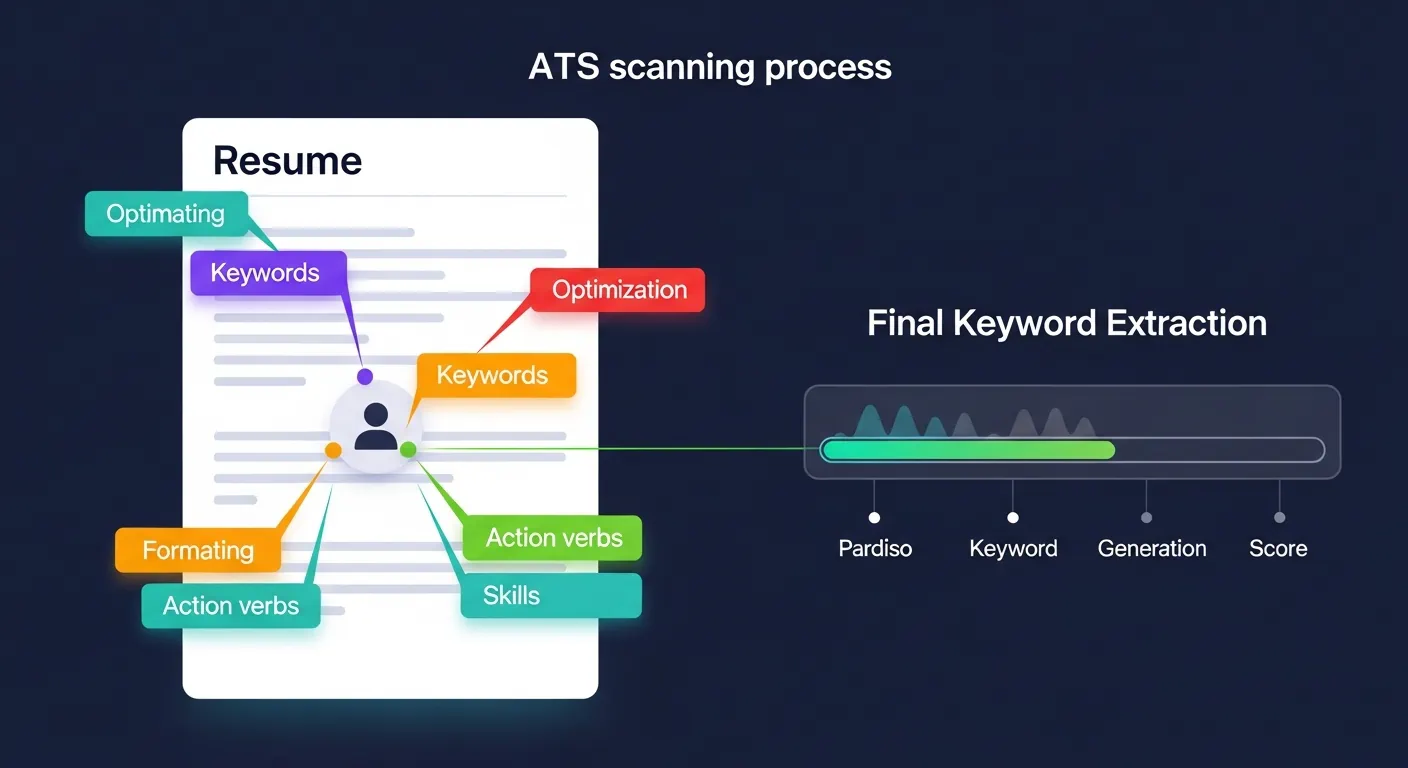
In today's competitive job market, your resume isn't just read by human eyes; it's first scanned by Applicant Tracking Systems (ATS). Navigating these digital gatekeepers is crucial for landing an interview. Many talented professionals inadvertently make common ATS mistakes that lead to their applications being overlooked. This guide delves into the essential resume keywords and formatting strategies you need to master, ensuring your resume not only passes the ATS filter but also impresses hiring managers.
Understanding how to optimize your resume for these systems is no longer optional—it's a critical skill for any job seeker. By focusing on smart keyword integration, clean formatting, and understanding the latest ATS trends, you can significantly boost your chances of getting noticed. Let's transform your resume into an ATS-friendly powerhouse.
Key Points for ATS Success:
- Keyword Optimization: Tailor keywords to each job description, using both hard and soft skills.
- Clean Formatting: Opt for simple, standard fonts and clear section headings.
- Quantifiable Achievements: Showcase impact with numbers, not just duties.
- ATS-Friendly File Types: Stick to PDF or Word documents as specified.
- Regular Updates: Keep your resume current with new skills and industry trends.
Understanding the ATS Landscape: Why Your Resume Needs Optimization
Applicant Tracking Systems are software applications that manage the recruitment process, from job posting to onboarding. They act as the initial filter for incoming applications, scanning resumes for specific criteria set by recruiters. Industry data from a 2024 HR Technology Review suggests that over 75% of large companies and nearly all Fortune 500 companies use an ATS. This means your resume's first reader is almost certainly a machine.
The primary goal of an ATS is to efficiently narrow down a large applicant pool to a manageable number for human review. It does this by searching for specific resume keywords, checking for relevant experience, and sometimes even evaluating formatting. If your resume isn't optimized, it might be automatically rejected without a human ever seeing it, regardless of your qualifications. This crucial initial screening highlights why avoiding common ATS mistakes is paramount for job seekers.
Mastering Essential Resume Keywords for ATS Success
Keywords are the lifeblood of an ATS-friendly resume. These are the specific terms and phrases that an ATS looks for to determine if your profile matches the job requirements.
Identifying the Right Keywords
The most effective way to identify relevant keywords is directly from the job description itself. Analyze each posting carefully for:
- Job Title Variations: "Marketing Manager" vs. "Manager, Marketing."
- Hard Skills: Specific software (e.g., Salesforce, Adobe Creative Suite), programming languages (e.g., Python, SQL), technical processes (e.g., Data Analysis, Project Management).
- Soft Skills: Often listed in the "requirements" or "qualifications" section (e.g., Communication, Teamwork, Problem-solving).
- Industry-Specific Terminology: Acronyms or jargon common in your field.
Don't just list keywords; integrate them naturally into your experience, summary, and skills sections. For example, instead of just saying "Proficient in Excel," you might write, "Utilized advanced Excel functions to analyze sales data and generate weekly performance reports."
The Evolution of ATS: Beyond Simple Matching
Modern Applicant Tracking Systems, especially those leveraging AI, are becoming increasingly sophisticated. While traditional ATS might focus on exact keyword matches, newer systems can understand context, synonyms, and even skill adjacencies. This is a significant differentiation from older advice. For instance, an AI-powered ATS might recognize that "customer relationship management" is related to "CRM" and "client retention," even if only one term is explicitly mentioned in the job description.
This means you should still use direct keywords from the job description, but also consider including semantically related terms and LSI keywords (Latent Semantic Indexing) to strengthen your resume's overall relevance. Think about the broader skillset and knowledge domain required for the role. This layered approach ensures your resume ranks highly for specific terms while also demonstrating a comprehensive understanding of the role's demands.
Strategic Resume Formatting to Avoid ATS Pitfalls
Even with the perfect keywords, poor formatting can lead to common ATS mistakes that prevent your resume from being parsed correctly. Simplicity and consistency are key.
Choose ATS-Friendly File Types
Always submit your resume in the format requested by the employer. If no specific format is mentioned, PDF is often the safest choice as it preserves formatting across different systems. However, some older ATS might prefer .docx files. A general rule is to have both versions ready. Avoid obscure file types like .pages or .odt.
Keep the Layout Clean and Standard
- Standard Sections: Use clear, conventional headings like "Contact Information," "Summary," "Experience," "Education," and "Skills." Avoid creative or unusual section titles.
- Simple Fonts: Stick to professional, widely available fonts such as Arial, Calibri, Times New Roman, or Georgia. Font sizes should be readable (10-12pt for body, 14-18pt for headings).
- Avoid Complex Designs: Intricate graphics, text boxes, tables, headers/footers, or images can confuse an ATS. While visually appealing to a human, they often get scrambled or omitted by the software. A clean, chronological format is almost always best.
- Bullet Points for Readability: Use standard bullet points (e.g., circular or square dots) for lists of responsibilities and achievements. Ensure symbols and titles are on the same line to avoid parsing errors.
Dates and Locations
Always use standard date formats (e.g., MM/YYYY or Month YYYY) and be consistent. Clearly list cities and states/countries for your work experience. This information is often used by ATS for geographic filtering.
Beyond Keywords: Content and Context for Modern ATS
While keywords are fundamental, the context in which they appear and the value you convey are equally important, especially for advanced ATS.
Crafting Compelling Accomplishment Statements
Beyond listing duties, focus on quantifiable achievements. Instead of "Managed social media," try "Grew social media engagement by 30% within six months, leading to a 15% increase in lead generation." Numbers provide tangible evidence of your impact and are easily recognized by ATS and hiring managers alike. These statements help to differentiate your profile, showcasing concrete results over vague responsibilities. This approach is key to crafting compelling accomplishment statements that resonate with both automated systems and human readers.
The Importance of a Well-Structured Summary
Your professional summary or profile statement is an excellent place to integrate high-value keywords and give an immediate overview of your capabilities. It should be concise (3-5 sentences) and highlight your most relevant skills and experience, setting the stage for the rest of your resume.
Latest Trends in ATS: AI and Contextual Screening
The landscape of Applicant Tracking Systems is continuously evolving. The latest systems are increasingly leveraging Artificial Intelligence and Machine Learning to move beyond simple keyword matching. This represents a critical development in avoiding common ATS mistakes.
According to a 2023 report by Gartner on "Future of Recruiting Technologies," AI-powered ATS can:
- Contextual Understanding: Analyze the meaning and relevance of phrases rather than just individual words. This means your skills and experience are evaluated within the broader context of your career story.
- Skill Adjacency Mapping: Identify related skills that you might possess, even if not explicitly listed. For example, if you list "Python," the ATS might infer proficiency in data science libraries or web development frameworks if your experience section supports it.
- Predictive Analytics: Some advanced systems attempt to predict candidate success based on patterns learned from previous hires, analyzing factors like career progression and tenure.
This trend means that while keywords remain vital, a holistic, well-written resume that tells a coherent story of your professional journey is more important than ever. Your resume should not only be scannable but also meaningful.
FAQ Section
Q1: What exactly is an ATS and why is it important for my job search? A: An Applicant Tracking System (ATS) is software used by employers to manage recruitment. It filters resumes based on keywords, experience, and formatting before human recruiters see them. Optimizing your resume for an ATS is crucial because a large percentage of applications are screened out by these systems, meaning an ATS-friendly resume significantly increases your chances of getting an interview.
Q2: How do I find the right keywords for my resume effectively? A: The most effective method is to thoroughly analyze the job description for hard skills, soft skills, industry-specific terms, and job title variations. Integrate these keywords naturally throughout your resume, especially in your summary, experience, and skills sections. Consider using synonyms and related terms to ensure broader ATS compatibility.
Q3: Is it okay to use a creative resume design to stand out? A: While creative designs can be visually appealing, they often cause significant ATS mistakes. Complex layouts, graphics, images, and non-standard fonts can confuse the system, leading to parsing errors or essential information being omitted. For optimal ATS compatibility, it's best to stick to clean, simple, and traditional resume formats, reserving creativity for your portfolio or interview.
Q4: Should I include a summary or objective statement on my resume? A: A professional summary is highly recommended. It provides a concise, keyword-rich overview of your skills and experience, immediately telling the ATS and recruiter why you're a good fit. Objective statements, focusing on what you want, are generally outdated. A strong summary should highlight your value proposition to the employer.
Conclusion: Your Path to ATS-Friendly Success
Navigating Applicant Tracking Systems effectively is a cornerstone of modern job searching. By proactively avoiding common ATS mistakes related to keywords and formatting, you position your resume for success. Remember, the goal is not just to pass the initial screening but to present a clear, compelling narrative that encourages recruiters to learn more. Continuously refine your resume, stay updated on industry trends, and always tailor your application to each specific role.
Ready to take your professional presence to the next level? Explore other articles in our Professional Skills Section for more strategies on mastering other professional skills. For a deeper dive into presenting your best self, consider how to optimize your cover letter for success or read about optimizing your cover letter for success.
Call to Action:
Did these tips help you understand ATS better? Share your thoughts in the comments below! We'd love to hear your experiences or any additional questions you have about essential resume keywords and formatting. Don't forget to subscribe to our newsletter for the latest insights on career development and job search strategies. For further reading, consider exploring articles on crafting compelling accomplishment statements to truly showcase your impact.
Expandable Related Subtopics for Future Updates:
- Advanced ATS Analytics and Predictive Hiring: A look into how ATS systems are used for deeper talent analysis.
- AI Interview Tools Integration with ATS: How AI is bridging the gap between resume screening and initial interviews.
- Personal Branding Beyond the Resume: Leveraging LinkedIn and online portfolios in conjunction with ATS optimization.